
Useful links
Psychological assessmentsPersonality, emotions and experiences that influence the way we think, feel and act.
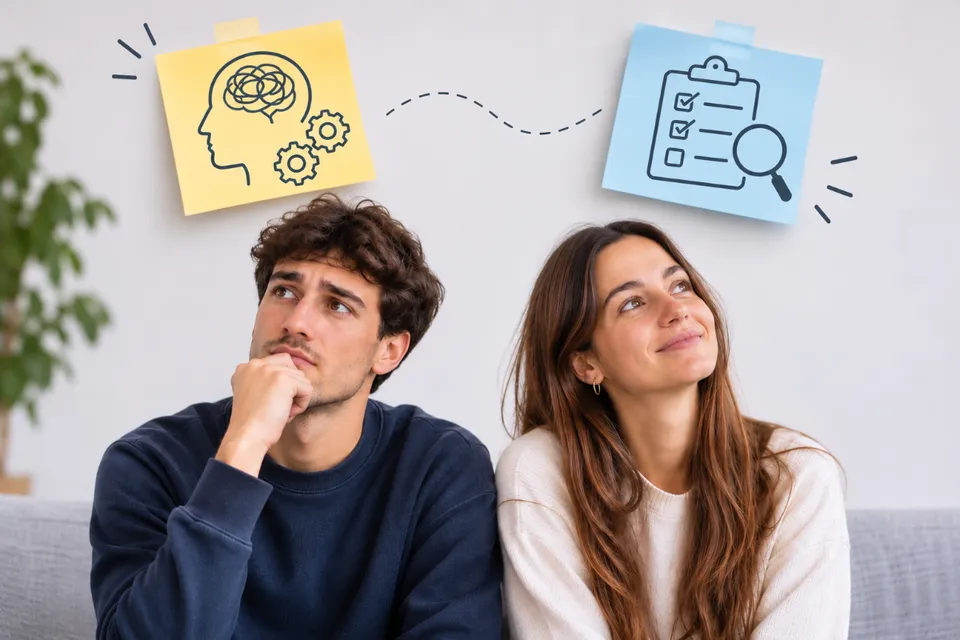
Have you ever wondered why two people can experience the same situation and react in completely different ways? What may be a challenge for one person could cause insecurity, worry or distress for another. These differences are related to the way we think, feel and interpret the world around us.
The influence of personality and experiences
Our personality, life experiences and environment influence how we interpret what happens to us. Each person develops patterns of thinking and behaviour that shape their reactions to different situations.
For this reason, the same experience does not necessarily have the same meaning for everyone. The way we perceive events can influence the decisions we make and how we interact with others.
The role of emotions and thoughts
Emotions also play a fundamental role in our reactions. Fear, frustration, sadness and happiness can all influence how we deal with everyday challenges.
Furthermore, the thoughts we have in response to a situation can shape our emotional reactions and behaviour. Identifying these patterns can help us better understand our reactions and develop resources to manage them.
The importance of understanding ourselves
Self-awareness allows us to identify our strengths, understand our difficulties and recognise the personal aspects that may influence our well-being.
In this context, a psychological assessment can help explore different dimensions of personal functioning, such as personality traits, emotional regulation, self-esteem, behavioural patterns and interpersonal relationships.
Through this process, it is possible to gain a broader understanding of each person's characteristics and personal resources.
Understanding ourselves is the first step
There is no single way to feel, think or react. Understanding what lies behind our responses allows us to get to know ourselves better and identify resources that support our emotional and personal well-being.


